AuburnDx · Rapid Biosensors
A rapid biosensor platform for food animal, companion animal and human health

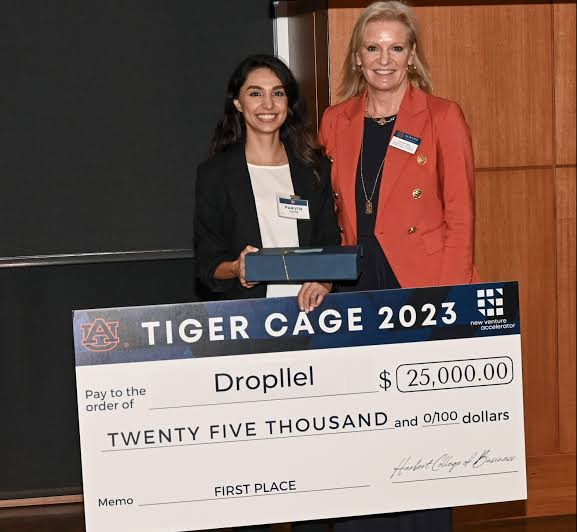
Operator and commercial lead for AuburnDx. Veterinary practice owner and hospital administrator. Auburn University Adjunct Professor and Entrepreneur in Residence.

Veterinary and animal-health domain lead. Former USDA National Director, cattle industry expert. Professor of Practice at Auburn. Leads Part 3 — Food Animal health impact.
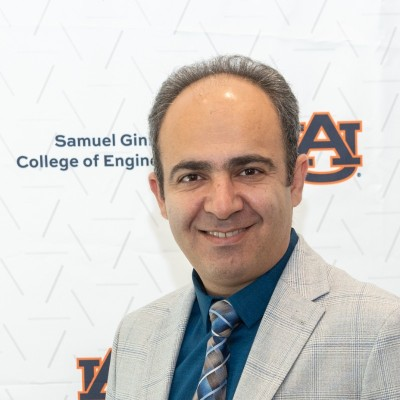
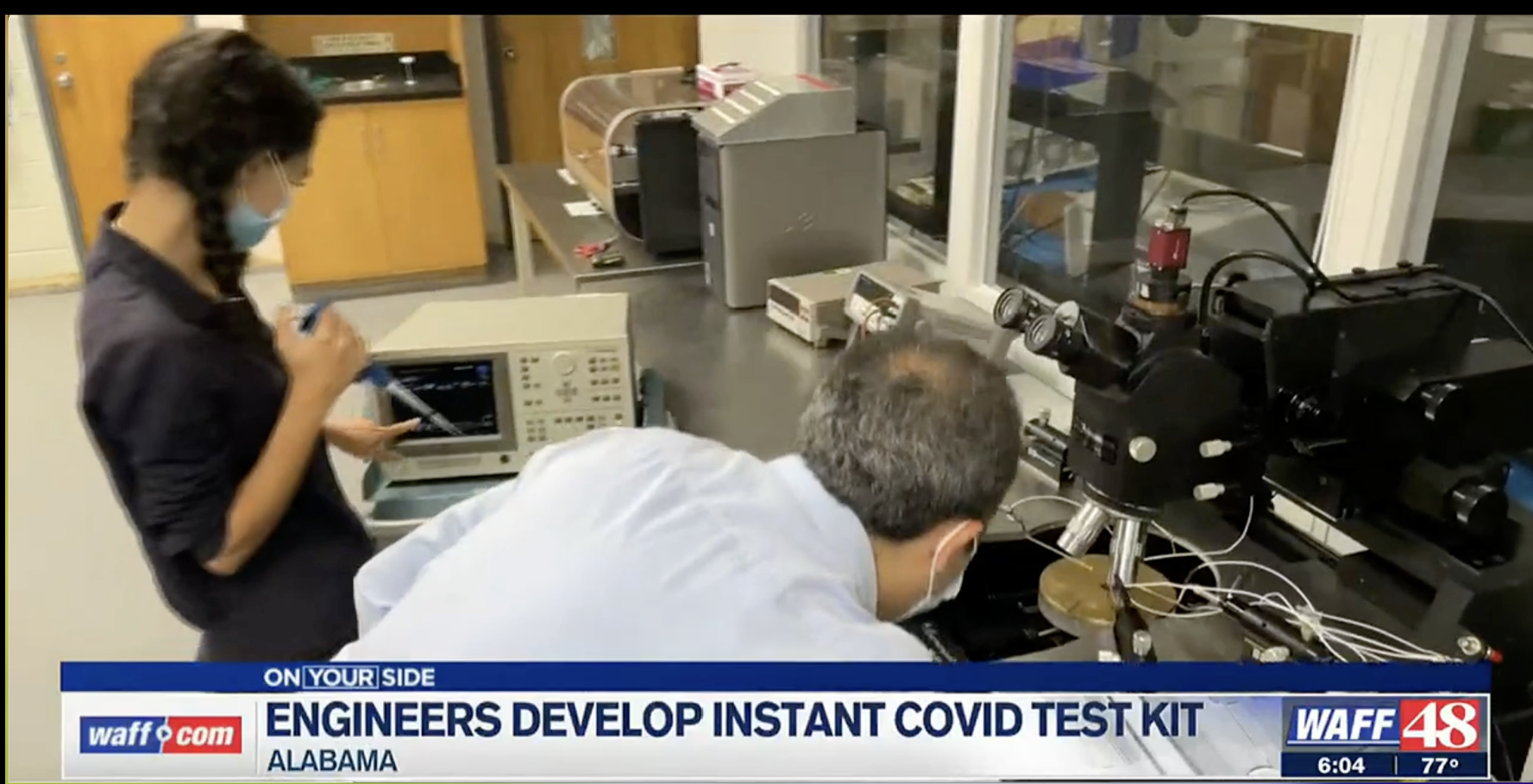
Associate Professor, ECE Auburn. Inventor of the FET nanomaterial biosensor and PI of the Laser-Assisted Science and Engineering Lab. Leads Part 2 — the technology.
Auburn University · Auburn IP Exchange · Laser-Assisted Science & Engineering Lab · U.S. Patent No. 12,123,845 B2, issued October 22, 2024 · Auburn New Venture Accelerator portfolio company.


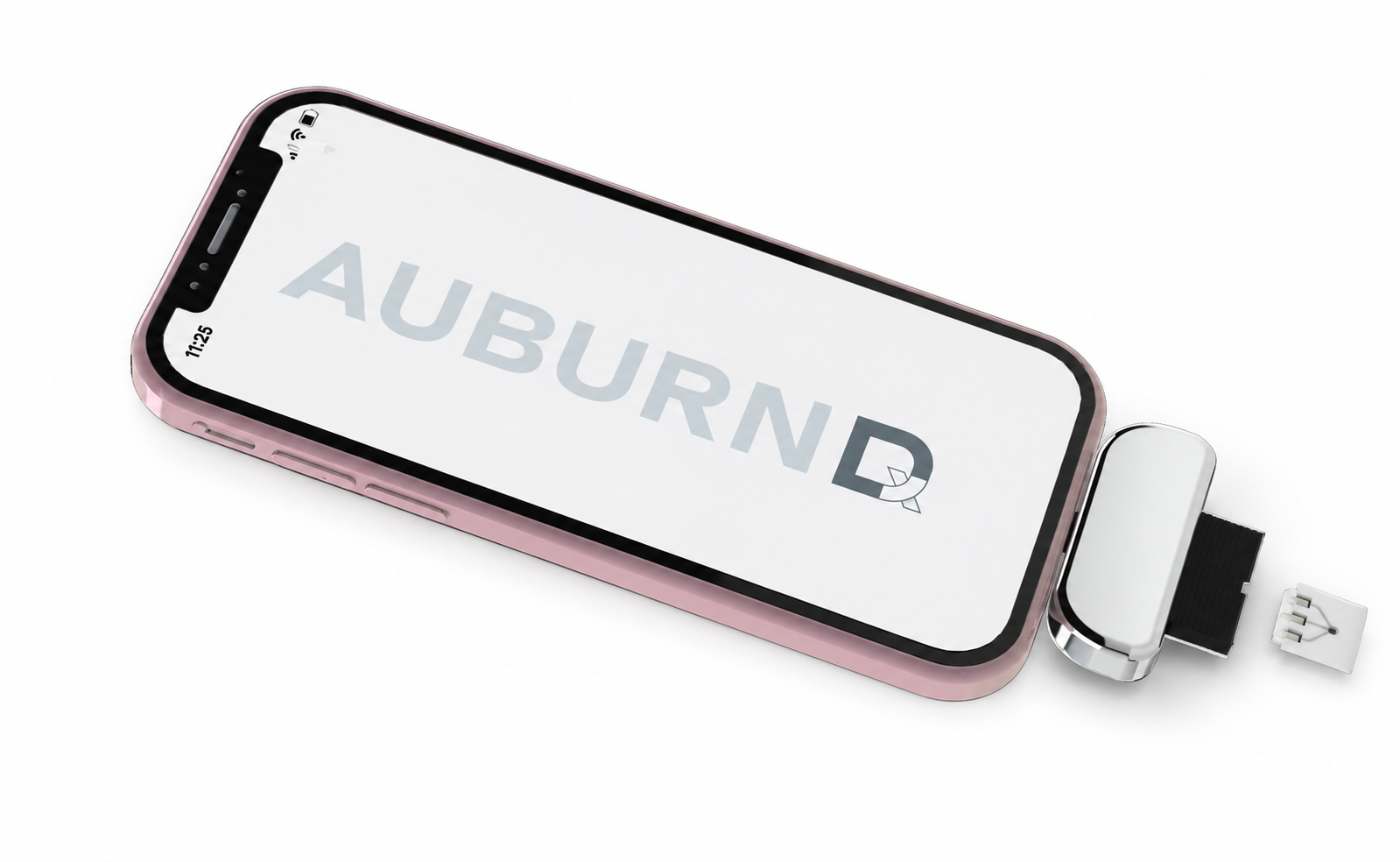
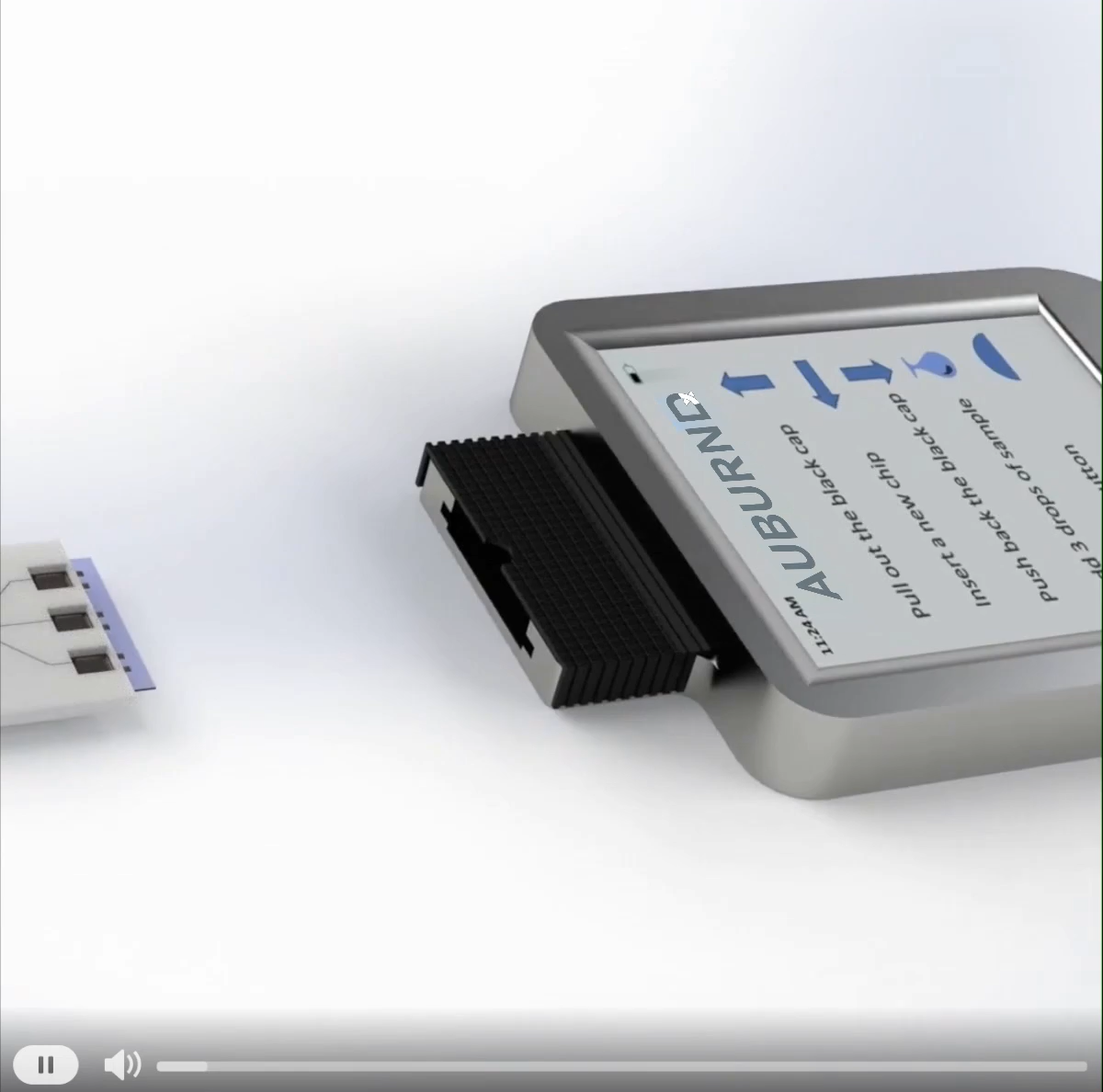
Field reader plus a disposable chip.
Standard wafer line — prototyped at Auburn and X-FAB.
Insert chip, add sample, push button. Results in seconds.


Time to answer at the point of collection — not a one-to-three-day round trip to a reference lab.
A limit of detection an order of magnitude below the approved rapid assays on the market today.
Same chip body, same reader. Only the capture antibody changes from one target to the next.
Several capture chemistries on a single chip, so one sample returns a panel rather than one answer.
Produced at wafer scale on semiconductor fabrication lines, not through biological reagent manufacture.
No refrigerated logistics, no extraction consumables and no reagent chain to maintain in the field.
Validated in-house to date:
| USDA PCR | BinaxNOW | CareStart | LumiraDx | AuburnDx | |
|---|---|---|---|---|---|
| Retail price / test | $25–80 | $12 | $14 | $13.60 | $5–10 |
| Sample prep | RNA extraction | 2 min | 2 min | 2 min | Drop & read |
| Time to result | 4–24 hr | 15 min | 10 min | 12 min | 20 sec |
| Limit of detection | ≈ 100 cp/mL | 22,500 cp/mL | 315,000 cp/mL | 22,500 cp/mL | 1,000 cp/mL |
| Setting | Centralized lab (NAHLN) | Point of care | Point of care | Point of care | Clinic / Field / Barn |
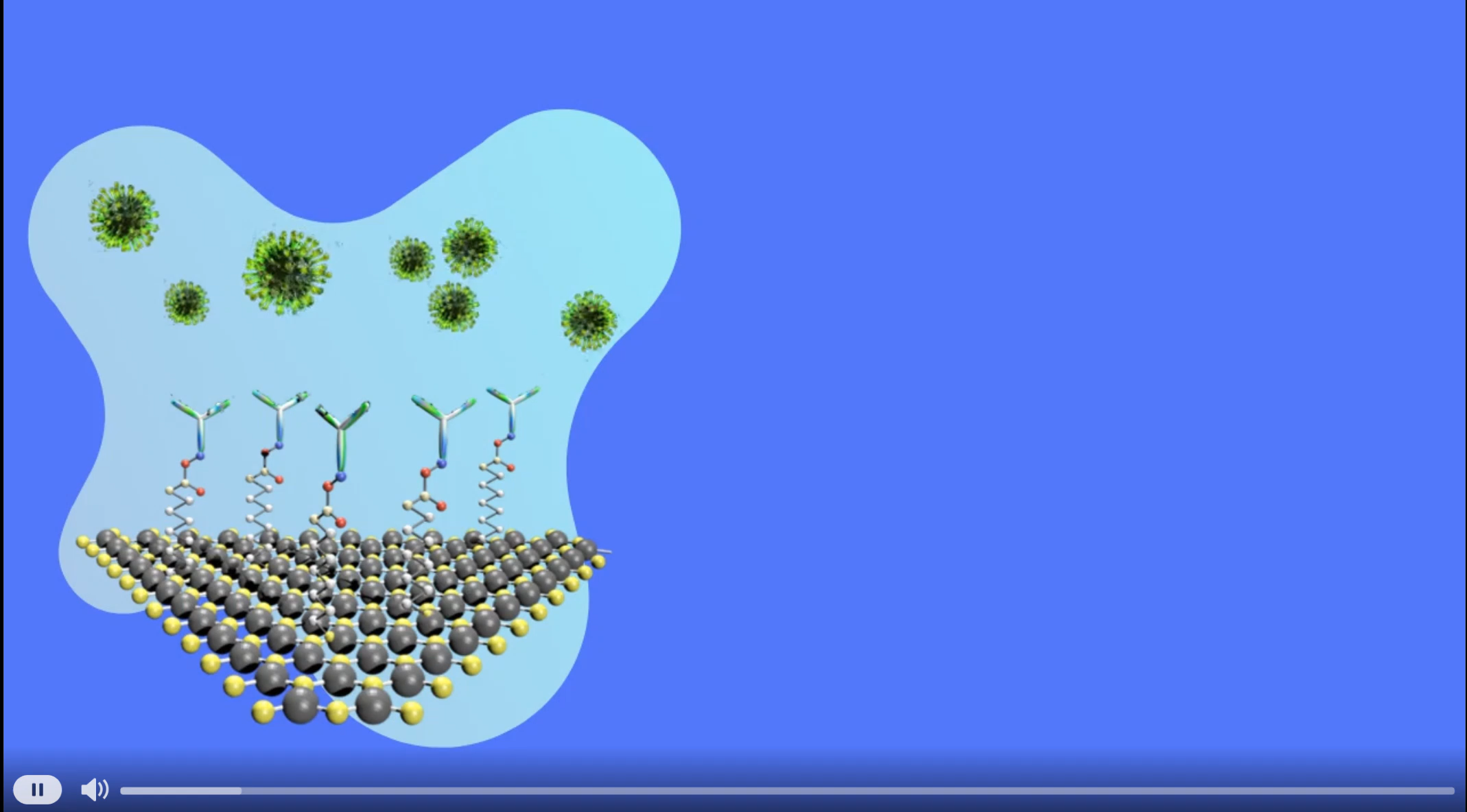
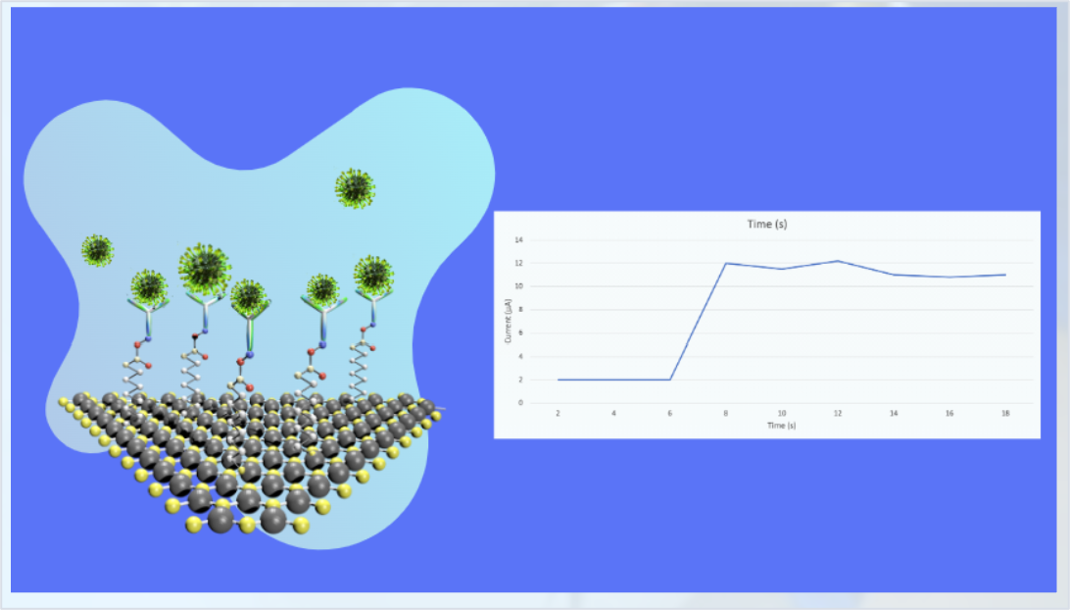
The WSe2 channel is activated with MUA linker chemistry, then coated with a target-specific antibody.
A drop of raw sample meets the liquid gate. No extraction, no amplification, no reagent chain.
Antigen binding perturbs surface charge, shifting current through the transistor channel directly.
The reader tracks current against time and returns a quantitative result in about 20 seconds.
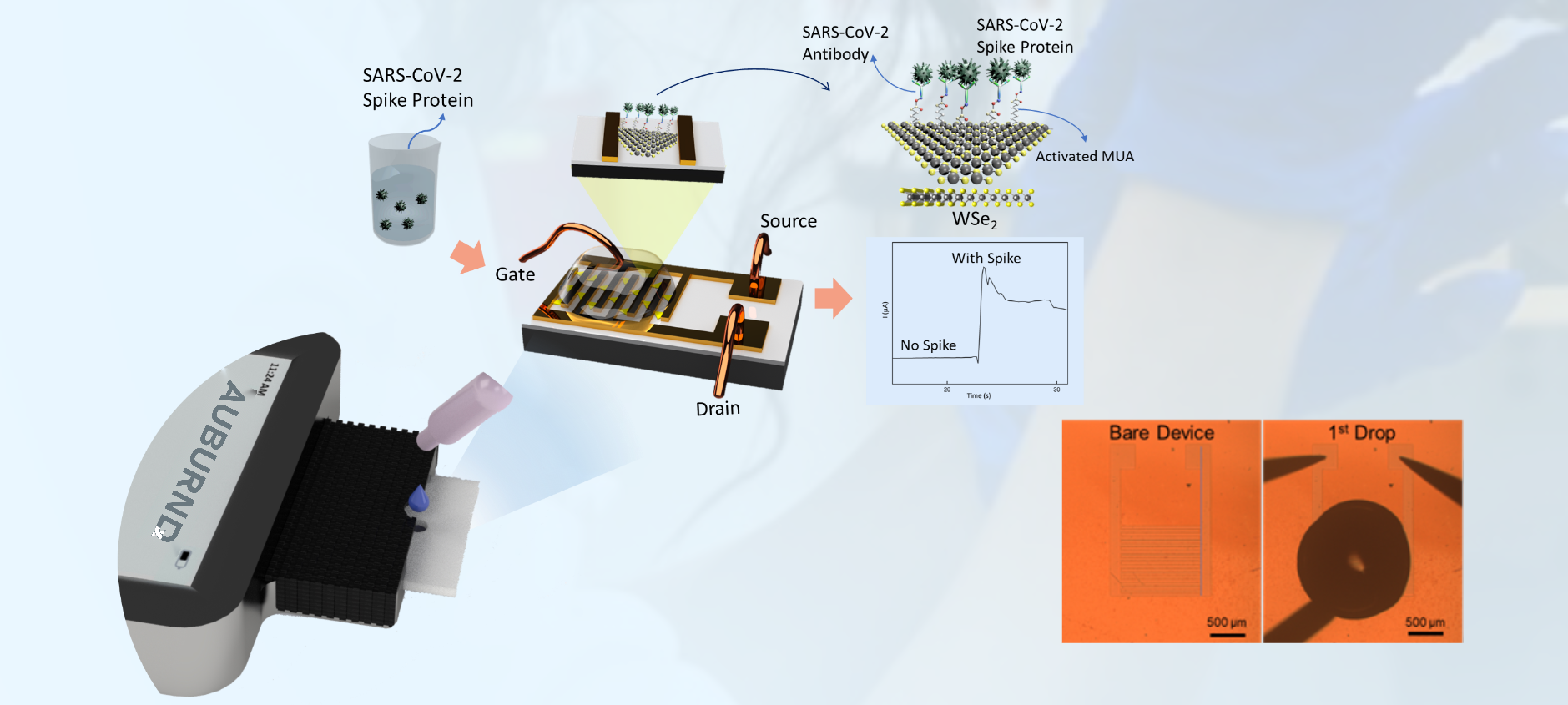
Sub-monolayer nanomaterial transduces a binding event into a direct electrical signal — no fluorescence, no amplification, no enzyme.
Antibody is covalently anchored at controlled density; the same chip body accepts any antibody pair we choose to functionalize.
Apply sample, watch real-time current shift. No incubation, no buffer exchange, no read-window guessing.
Microcontroller-driven handheld unit. Razor / razor-blade economics: capital in once, consumables forever.
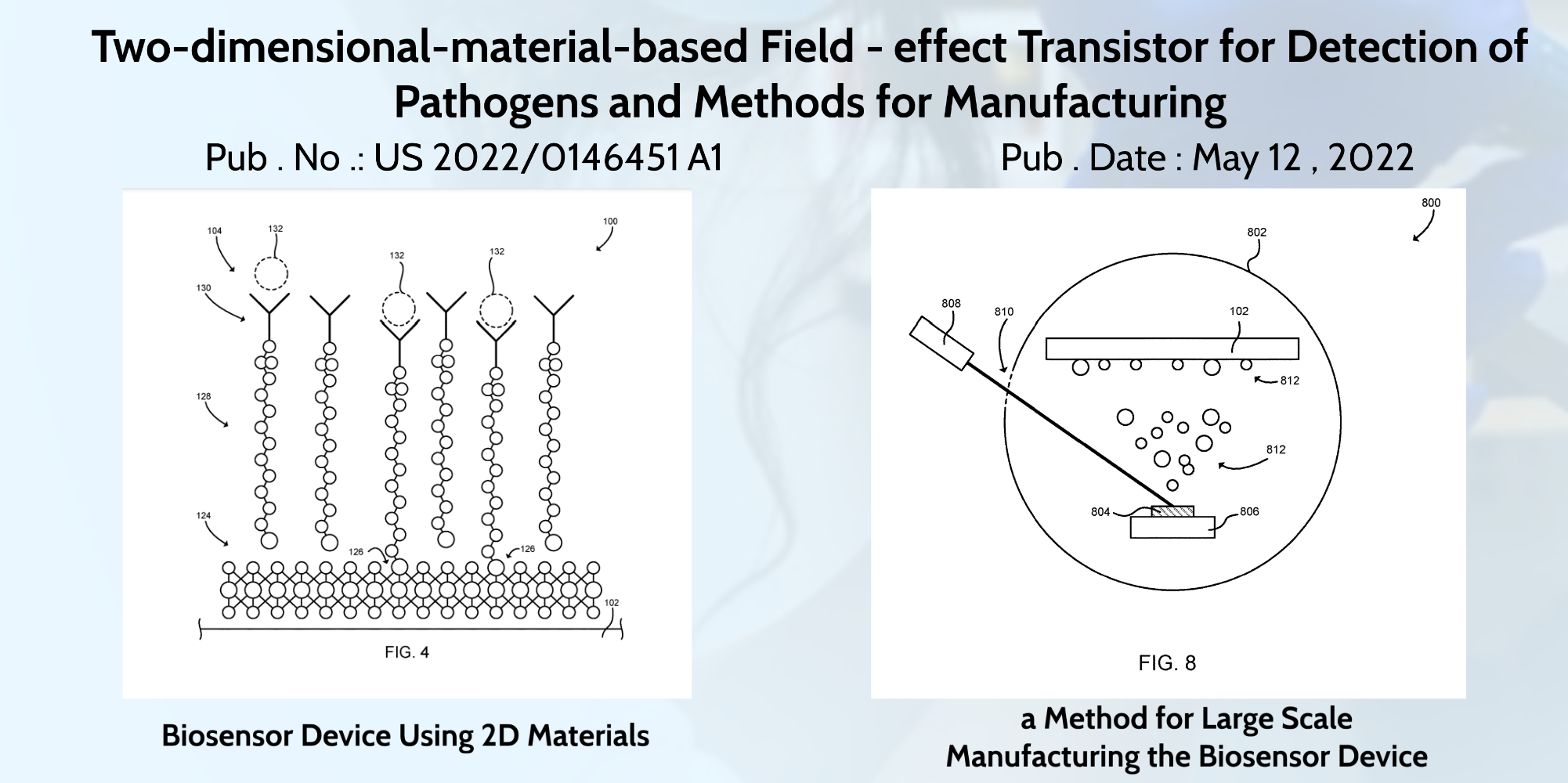
U.S. Patent No. 12,123,845 B2, issued October 22, 2024 — protecting the FET nanomaterial biosensor platform.
Filed through Auburn IP Exchange, with additional patents in nanomanufacturing and two-dimensional electronic devices held by the lab.
Proven across three pathogen classes already — viral (SARS-CoV-2), influenza, and bacterial (MRSA). Each new target requires only a new antibody pair on the same chip architecture.
Each panel adds incremental ARPU on the same instrument base — the IDEXX SNAP playbook, accelerated.
Drop-and-read on bulk milk silo samples. Replace overnight PCR turnaround with 20-second screening at intake.
On-route mobile screening for state milk programs. Same chip, same reader, no lab handoff.
Pen-side raw-milk and/or nasal-swab testing for herd-level case finding during a Stage 3 response.
Lactating-cow pre-movement testing in minutes — opens the interstate gate without sending samples to NAHLN.
PCR is sensitive but slow, lab-bound, and expensive per sample. Lateral-flow is fast but blind below ~22,500 cp/mL. AuburnDx is the first format that delivers PCR-class sensitivity with rapid-test economics and field-test speed — exactly what NMTS Stages 1–4 require as the program scales.
≈ 60¢ COGS at scale via standard CMOS wafer line; 80–90% gross margin headroom.
≈ $15 simple device COGS at scale could be conservatively sold at $60 for a 75% profit margin.
Every new disease panel rides the installed base — no instrument refresh required.
≈ 27,000 U.S. dairy operations
≈ 232,000 commercial flocks
NAHLN + LAB Co. networks
> 50,000 small/mixed practices
Global companion + production animal diagnostics market (2025E)
USDA NMTS; ~27k dairies × ongoing testing × 5-year mandate horizon.
Pre-harvest influenza.
BVDV, BRSV, mastitis pathogens — premium-margin replacement of slow costlier tests.
COVID, Influenza A/B, and MRSA functionalization completed. FET reader prototypes in hand.
Complete market-ready MVP: production chip SKU, finalized reader firmware, packaging, and pre-validation kit.
H5N1 functionalization & analytical validation at a partner BSL-3 facility and test onsite in the field.
USDA conditional license, and expansion to multi-pathogen panels.
Built for a commercial platform like yours — scale-up is the remaining work.
Get the technology into food and companion animal health, fast.
Find this IP a long-term home inside IDEXX.
Contact:
Jennifer Nay — CEO, AuburnDx · jgn0012@auburn.edu
Infectious disease testing runs on two modalities. Neither closes the gap.
Amplifies nucleic acid, so it detects at low viral load — early enough to contain. It costs a shipped sample and days of turnaround.
Reads a binding reaction on site in minutes, but needs high antigen titer — early infections read negative.
The two have never converged because the readouts are physically incompatible — amplification and reagent chemistry versus an optical endpoint. So the industry runs both: reference labs for sensitivity, point-of-care for speed. The blind window between them is where containment stops being cheap.
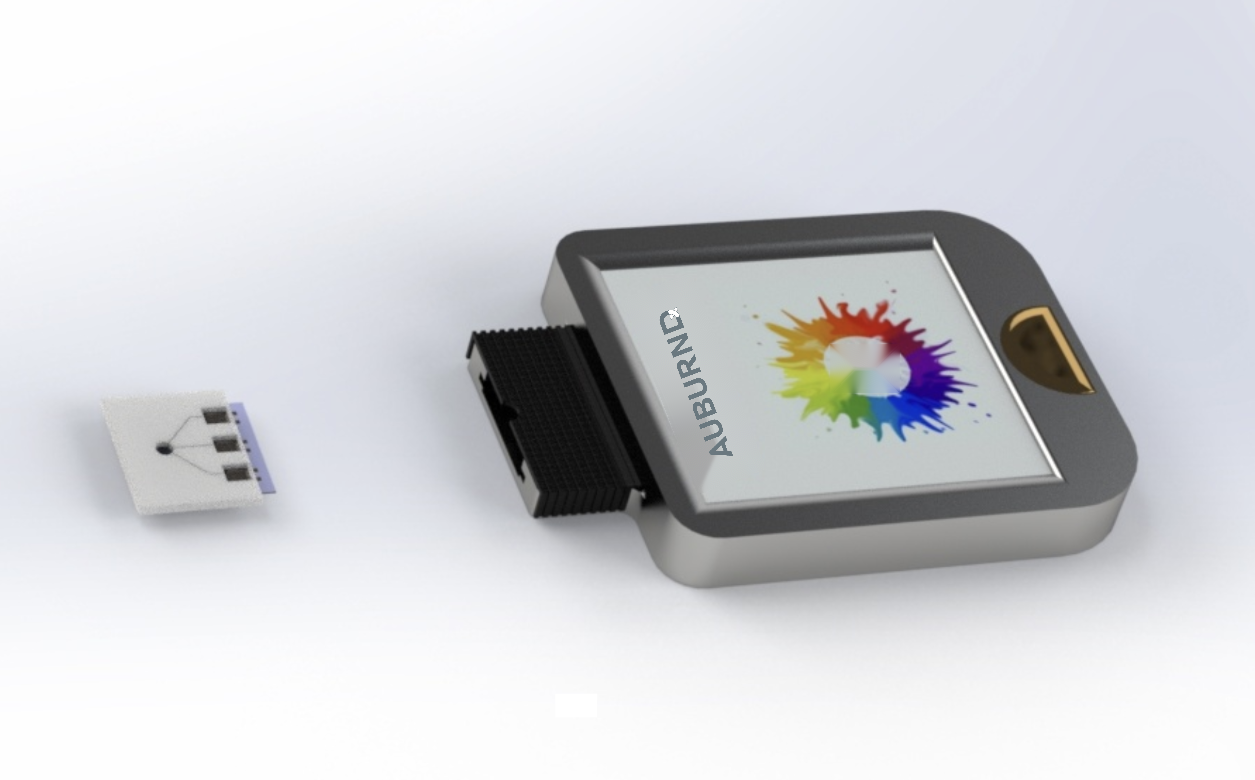
AuburnDx is the first format that delivers PCR-class sensitivity with rapid-test economics and field-test speed.